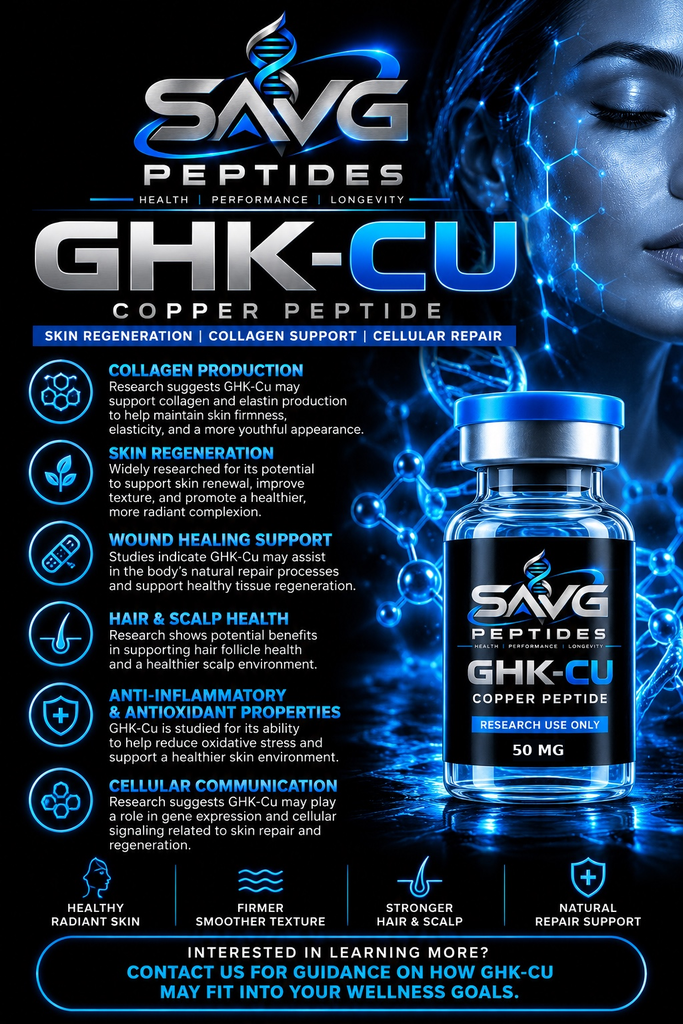
GHK-Cu
GHK-Cu is a naturally occurring copper-binding tripeptide made from glycine, histidine, and lysine. It is found in human biological fluids and has been studied for its involvement in extracellular-matrix remodeling, cell signaling, and tissue-repair pathways. Its presence in the body does not establish that injected or topically applied products are safe or effective.
1. Collagen and Extracellular Matrix Research
GHK-Cu has been investigated for effects on fibroblast activity and proteins that give skin structure, including collagen and elastin. Laboratory findings suggest it may influence the balance between matrix production and breakdown. Whether these effects translate into meaningful cosmetic improvements depends on formulation, concentration, delivery method, and human clinical evidence.
2. Skin Renewal and Appearance
Small studies and cosmetic research have examined copper peptides in relation to skin texture, firmness, and the appearance of fine lines. Results are preliminary and should not be interpreted as proof that every GHK-Cu product improves wrinkles or reverses aging.
3. Wound and Tissue Repair Pathways
Preclinical research has explored GHK-Cu in wound-related processes, including cell migration, remodeling of the extracellular matrix, and inflammatory signaling. These findings do not establish GHK-Cu as an approved treatment for wounds, burns, scars, or injuries.
4. Hair and Scalp Research
Researchers have explored whether copper-binding peptides influence hair follicle biology and the surrounding skin environment. Human evidence specifically demonstrating that GHK-Cu regrows hair or treats hair loss is limited. It should not be presented as a proven hair-growth therapy.
5. Oxidative Stress and Inflammatory Signaling
Experimental studies have evaluated potential effects on oxidative-stress responses and inflammatory pathways. Findings are mechanistic and early-stage; they do not prove that GHK-Cu prevents or treats inflammatory diseases.
6. Cellular Signaling and Gene Expression
Laboratory investigations suggest that GHK-Cu may influence patterns of gene expression linked to tissue maintenance and repair. Gene-expression changes are research observations, not direct evidence of clinical benefits or increased longevity.
7. Forms and Routes Studied
GHK-Cu appears in some cosmetic skincare formulations, and researchers have investigated it in experimental delivery systems. Evidence from topical cosmetic use cannot be assumed to apply to injected GHK-Cu. Injectable research products have additional concerns involving sterility, purity, dose, and systemic exposure.
8. Evidence and Safety Limitations
- Evidence: Much of the published work is laboratory or preclinical, with limited high-quality human clinical data.
- Regulatory status: GHK-Cu injections are not FDA-approved to treat skin aging, hair loss, wounds, or other medical conditions.
- Potential risks: Irritation or allergy may occur with topical products; injection introduces risks including infection, contamination, local reactions, and uncertain systemic effects.
- Quality: A stated vial amount such as 50 mg identifies nominal content, not a recommended dose or proof of potency, purity, or sterility.