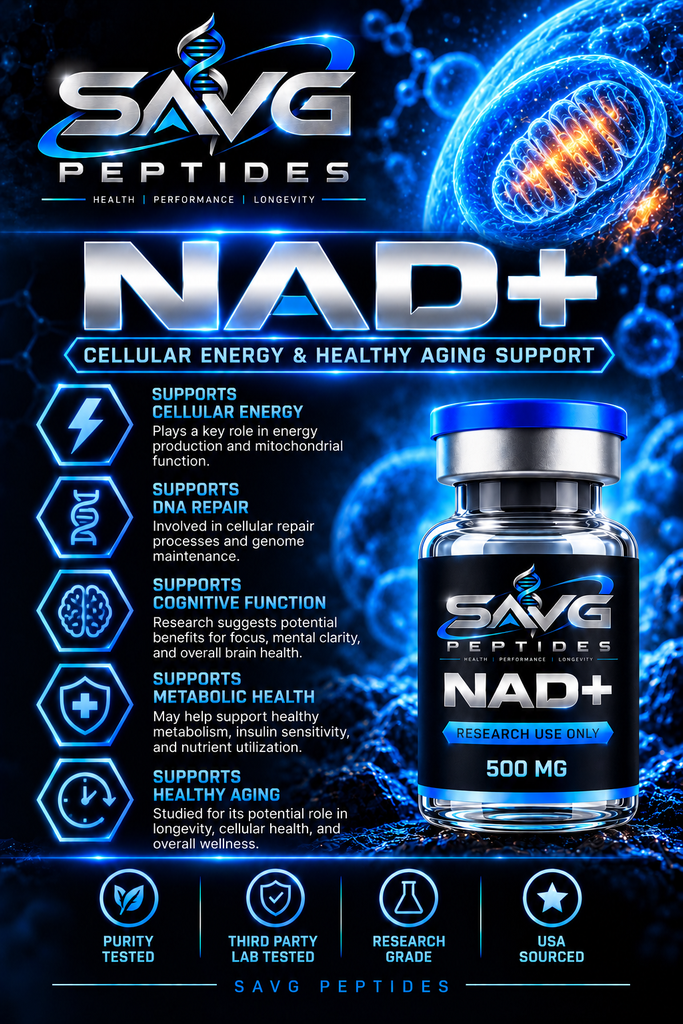
NAD+
Cellular Energy · Metabolic Pathways · DNA Maintenance
What is NAD+?
Nicotinamide adenine dinucleotide (NAD+) is a coenzyme naturally present in living cells. It helps transfer electrons during reactions that convert nutrients into usable cellular energy. NAD+ also serves as a substrate for enzymes involved in cellular signaling and DNA maintenance. NAD+ is not a peptide.
Key Areas of Research
NAD+ participates in redox reactions essential to cellular energy production and mitochondrial metabolism.
Some DNA repair and stress-response enzymes consume NAD+ as part of their normal activity.
Researchers study NAD+-dependent pathways involved in nutrient sensing, cellular signaling, and metabolic adaptation.
Scientists are examining how NAD+ levels and related enzymes change with age, and whether interventions affect health outcomes.
What Does Human Research Show?
Some approaches can change NAD+-related biomarkers, but there is not enough reliable clinical evidence to conclude that NAD+ products improve energy, cognition, athletic performance, or longevity in otherwise healthy people. Results depend on the specific compound, formulation, and route of administration.
Important Safety Information
Injectable NAD+ products are not FDA-approved for anti-aging, wellness, or performance enhancement. Their safety, effectiveness, and appropriate dosing for these purposes are not established. Research-use-only materials are not intended for human administration.
SAVG PEPTIDES · Educational research information only. This content does not claim that a product treats or prevents disease.